Early Bahá’ís in Hawaiʻi
Photograph by Frank H. Nowell
Alaska-Yukon-Pacific Exposition Collection
No restrictions
Martha Louise Root
1872 - 1939
“Thou art, in truth, a herald of the Kingdom and a harbinger of the Covenant. … Thou art truly self-sacrificing. Thou showest kindness unto all nations. Thou art sowing a seed that shall, in due time, give rise to thousands of harvests. Thou art planting a tree that shall eternally put forth leaves and blossoms and yield fruits, and whose shadow shall day by day grow in magnitude.”
~ ‘Abdu’l-Bahá, in a letter to Martha Root,

Martha Root’s gravesite is located in the Oahu Cemetery at 2162 Nuuanu Avenue, about nine (9) miles from the Honolulu International Airport.
The hours of the cemetery are 7:00 am to 6:00 pm
At the annual North American Bahá’í convention in 1919, held at the Hotel McAlpin in New York, the Tablets of the Divine Plan penned by ‘Abdu’l-Bahá, then head of the Bahá’í Faith, were shared. These letters, in which the fledgling group of Bahá’ís were asked to travel the world to spread the Bahá’í teachings, detailed over a hundred nations, territories, and islands to be visited—including the Hawaiian Islands. For many Bahá’ís the 1919 convention was their first opportunity to hear of ‘Abdu’l-Bahá’s master plan.
Martha Root, one of the delegates, was particularly moved. The story persists that when the session was over Martha was nowhere to be found. She was upstairs packing her bag to leave, losing not an hour before acting on the instructions of ‘Abdu’l-Bahá. She was seized with the idea of making travel arrangements at once to go to South America. After visiting Brazil—and being the first Bahá’í to visit Argentina and Uruguay, this small, frail, woman (who was battling cancer) would cross the Andes by mule to be the first Bahá’í in Chile.
In her subsequent travels for the Faith, she would circle the world four times and be the first Bahá’í to visit Cuba, Panama, Bulgaria, Latvia, Lithainia, Estonia, and Albania. She would be known for her numerous visits with heads of state and other public figures. Of special importance was her interaction with Queen Marie of Romania, considered the first royal to accept Baháʼu’lláh, the founder of the Bahá’í faith. Shoghi Effendi, the Guardian of the faith, would call her “the foremost travel teacher in the first Baháʼí Century”, and named her a Hand of the Cause of God posthumously.
Martha Root was born on August 10, 1872, in Ohio, and was raised in the Baptist church. Shortly after her birth, the family moved to Pennsylvania, where her father ran a dairy farm. Martha was not a typical girl, since her interest lay in books rather than the usual domestic pursuits. She distinguished herself in high school and college, earning a degree in literature from the University of Chicago in 1895. She started teaching after her degree but soon gave that up to become a journalist.
In 1908, she overheard a conversation in a Pittsburgh restaurant about the Bahá’í Fatih. While researching the religion, she met several members of the Baháʼí community and in 1909 declared her faith in Baháʼu’lláh. That year, she wrote a detailed article for the Pittsburgh Post about the history and teachings of the Baháʼí Faith. She also participated in the first annual Baháʼí convention in Chicago in 1911.
In 1912, ʻAbdu’l-Bahá, the son of the founder of the Baháʼí Faith, visited the United States and Canada. Martha attended many of his talks and arranged for ‘Abdu’l-Bahá to present a talk in Pittsburgh where she had two private interviews with him. He presented her with a white rose and infused her spirit with his love, for he must have sensed her gargantuan capacity for teaching the Bahá’í Faith. During this time, Martha developed breast cancer, but with advice from ‘Abdu’l-Bahá it went into remission for several years.
‘Abdu’l-Bahá’s visit had greatly affected Martha and on January 30, 1915 she sailed out of New York on her first around the world teaching trip. After visiting some countries in Europe, she traveled to Egypt and stayed there for six months, writing newspaper articles. She then traveled to India, Burma, Japan, at the invitation of Agnes Alexander, Hawaii.
After the South American trip, she traveled to Canada in 1920 where she arranged teaching programs. She then travelled to Mexico and then Guatemala. By 1921, her breast cancer had spread, and she was in frequent pain. That year, she became the first female faculty member at Polish National Alliance College in Cambridge Springs, PA.

In 1922, Martha expanded her travel to many parts of the United States and Canada, and then to Japan and China, with Agnes Alexander. Martha had eight thousand copies of ‘Abdu’l-Bahá’s statement on teaching the Chinese sent to friends all over the world. She then travelled to Hong Kong, Australia, New Zealand, Tasmanian and helped Baháʼí pioneers teach the Faith. She then traveled to South Africa, where she gave the first radio broadcast about the Bahá’í Faith in Africa.
In 1925, Martha Root travelled to the Baháʼí holy land, and met Bahíyyih Khánum, the daughter of Bahá’u’lláh, and Shoghi Effendi. They prayed together at the shrines and conferred on her teaching work. The beauty and dignity of Bahiyyih Khánum touched Martha deeply. She then traveled throughout Europe, then to Iran, even though Shoghi Effendi hoping to meet with the Sháh, but was not able to do so.
In January 1926, Martha arrived in Bucharest, where she sent her a picture of ʻAbdu’l-Bahá and a copy of the book, Baháʼu’lláh and the New Era, to Marie, Queen of Romania. As a result of her contact with Martha, Queen Marie published articles supporting the Bahá’í Faith in the United States and Canada, beginning by referring to Martha. “If ever the name of Bahá’u’lláh or Abdu’l-Baha comes to your attention,” wrote the Queen, “do not put their writings from you. Search out their Books, and let their glorious, peace-bringing, love-creating words and lessons sink into your hearts as they have into mine.” Martha met Queen Marie on seven further occasions.
In 1930, she wanted to meet with Emperor Hirohito of Japan, but US officials blocked her access. Instead, she sent the Emperor some Baháʼí books and some other gifts. In Montreal, in 1932, an interview with Martha was the first known use of radio to spread knowledge of the Faith in Canada. She continued to teach, even while ill, travelling in 1937 to Hawaii, China and India. She returned to Hawaii in 1938 where she died on September 28, 1939. When Martha Root passed away in Honolulu, Shoghi Effendi notified the Baha’is. “Martha’s unnumbered admirers throughout Bahá’í world lament with me the earthly extinction of her heroic life. Concourse on high acclaim her elevation to rightful position in galaxy of Bahá’í immortals. Posterity will establish her as foremost Hand which ‘Abdu’-Bahá’ís will has raised up in first Bahá’í century.”
Agnes Baldwin Alexander
1875 - 1971
“At this time, in the Hawaiian Islands, through the efforts of Miss Alexander, a number of souls have reached the shore of the sea of faith! Consider ye, what happiness, what joy is this! I declare by the Lord of Hosts that had this respected daughter founded an empire, that empire would not have been so great! For this sovereignty is eternal sovereignty and this glory is everlasting glory.”
~ ‘Abdu’l-Bahá

Hawaii’s First Bahá’í
One of the remarkable features of the Bahá’í Faith is the extraordinary role played by women in its establishment and spread throughout the world. Some of these women, such as the Iranian poet Táhirih, lived lives charged with drama. One of the faith’s first adherents, Táhirih was strangled to death in 1852 for fearlessly championing the emancipation of women, a struggle at the forefront of the news in Iran even today.
On the contrary, Miss Agnes Alexander, who brought the Bahá’í Faith to Hawaii in 1901, was not one of those. Her story nevertheless shows how an ordinary person can—through perseverance—accomplish extraordinary things. All but singlehandedly, this humble heroine introduced a new faith to three nations—Hawaii, Japan, and Korea.
Agnes was born in Hawaii in 1875. In 1900 while travelling in Europe she overheard a conversation about an obscure new religion. She apologized for eavesdropping and introduced herself to the first Bahá’ís she would meet. That same year she embraced the Bahá’í cause in Paris, France and a year later returned to Hawaii to establish its Bahá’í community, the first Bahá’í community within Australalsia.
In certain respects, Agnes was following in the footsteps of her ancestors, the Baldwins and Alexanders, Christian missionaries who had come to Hawaii in the 1830s to help establish the Christian Faith. By 1875, descendants of the missionaries had become the business elite of Hawaii and with other merchants would soon conspire to overthrow the Hawaiian monarchy. Unlike her ancestors, Agnes was a proponent of racial amity and cultural and religious diversity. Despite her privileged birth, she lived in the simplest of circumstances, often moving from place to place with no home of her own to promote her adopted faith.
Overcoming the indifference and occasional opposition of her family, she slowly brought a small handful into the faith and by 1911 the first Bahá’í Assembly was formed in Honolulu. Although the Baha’i teachings were presented to Queen Lili’uokalani in 1915, the first native Hawaiian, Mary Fantom, did not became a Baha’i until 1923. Agnes and Mary would be friends for life, ultimately living in the same elder care home in Honolulu.
Encouraged by ‘Abdu’l-Bahá, head of the faith after the passing of its founder Bahá’u’lláh in 1892, Agnes moved to Japan in 1915. Unable to speak Japanese, she built friendships through Esperanto language groups and among blind students. It would take 18 years to attract enough people to the faith to elect the first Bahá’í institution, the Spiritual Assembly of Tokyo in 1932, and another 25 years to build up sufficient local Bahá’í communities throughout the country to elect the first National Spiritual Assembly.

Her perseverance in sharing her faith, one to one, over several decades was key to its slow but steady development. An example of the level of her dedication can be seen in the story of Michitoshi Zenimoto, a survivor of the Hiroshima blast who met Agnes in 1952. At university he studied Christian theology but had questions: Why do Christians kill Christians in war? Is there no salvation for his Buddhist grandparents? He was harshly rebuked by his teacher for asking such questions. When he met Agnes, she explained the basic Bahá’í concepts of the unity of humankind and religions. Michitoshi was intrigued.
“If you are interested in Bahá’í, I will come to teach you,” she said. “What time should I come?” Michitoshi, in his mind, wanted to say, “come once a week,” but his heart controlled his mouth and the words he spoke were, “Every day, please.” So, for 100 consecutive days Agnes went to Doshisha University and talked with Michitoshi about the Baha’i Faith. One day when Kyoto was covered with a foot of snow and was so cold the trains stopped running, Michitoshi didn’t think that the 78-year-old Agnes would come, but when he arrived at the university, Agnes was waiting for him. She then travelled to Hiroshima to meet and lovingly reassure Michitoshi’s family.
Agnes was also the first Bahá’í to visit Korea and among the early teachers of the faith in China. Her service was not restricted to Asia Pacific. While travelling through Germany in 1937 to visit Bahá’í communities at the request of the Guardian of the Bahá’í Faith, Shoghi Effendi, the Nazi government banned the Bahá’í religion. Agnes could not fulfill the Guardian’s request until 1959, when at 84 she visited every Bahá’í group in the country. In her later years, she travelled extensively in Europe, Australia, Asia, and the Pacific.
Agnes returned to Hawaii frequently to bolster its Bahá’í community. It was not until 1964 that sufficient membership had been built up throughout the islands for the Bahá’í community to elect its first National Spiritual Assembly. At the time of its formation, her role was recognized by then Governor John Burns.

It had taken more than 1500 years for the Christian Faith to reach Japan and 1800 years to reach Hawaii. Through the efforts of Agnes Alexander, the Bahá’í message reached Hawaii less than 10 years after the passing of Bahá’u’lláh, and Japan after just 22 years. Today, through the efforts of spiritual pioneers like Agnes Alexander, the Baha’i faith is the second most widespread religion in the world.
In praising Agnes in the passage from the Tablets of the Divine Plan quoted above, ‘Abdu’l-Bahá evidently saw the future—that through the small steps taken by Bahá’í teachers such as Agnes Alexander his Father’s faith would spread around the planet.
In 1955, Agnes Alexander was named a “Hand of the Cause of God” by the Guardian. The Hands of the Cause were the small group of Bahá’ís at the forefront of the global expansion of the faith. After the passing of Shoghi Effendi in 1957, Agnes joined the other Hands in arranging for the election of the Universal House of Justice, the governing council of the international Bahá’í community. She continued her service uninterrupted until, at the age of 90, she broke her leg and was unable to walk for the remaining five years of her life.
Agnes Alexander passed away in Honolulu in 1971 and is buried in at Kawaiahao Church amidst her missionary forebearers. Consistent with her humble demeanor in life, her unpretentious grave offers no indication that this extraordinary ordinary woman had achieved ‘eternal sovereignty’ and ‘everlasting glory’.
For the story of her life read Agnes Alexander – Hand of the Cause of God, by Earl Redman and Duane Troxel, published by George Ronald, Oxford, 2022, 486 pages (including photos), available in paper and digital formats from www.grbooks.com and online booksellers.
Mrs. Mary Kealiʻikahumoku Tilton Fantom
1879 - 1972

On February 16, 1923, Mary Keali’ikahumoku Tilton Fantom of Sprecklesville, Maui became the first person of Hawaiian ancestry to embrace the Faith of Bahá’u’lláh.
Mary (May) Fantom was born in Hamakuapoko, Maui in the Kingdom of Hawaii on July 7, 1879, and spent most of her life in Sprecklesville. Her parents were Frank Lalio Tilton (1832-1890) and Laa Hanalei Kamaulu (1853-1893), both of Hawaiian ancestry. Mary had five sisters and three brothers. On 6 May 1905 she married James Thomas Fantom (1876-1955). Originally from England, James was head overseer for the Hawaiian Commercial & Sugar Company on Maui.
Mary learned of the Bahá’í teachings from Kathrine Alexander Baldwin, a Bahá’í who lived at Haleakala Ranch. From the first Mary Fantom was devoted to her new faith and was known to contribute generously to Bahá’í activities. She was affectionately known as “Auntie May” for the warm spirit of ohana she engendered in the Bahá’í community. For many years she served as recording secretary of Maui’s first Local Spiritual Assembly, established in 1928. She was also one of the first to hold Bahá’í children’s classes on Maui, and each year in June, Bahá’ís and their friends gathered in her spacious gardens for a Unity Feast.

Her friend Lillian Chou once commented, “Although she and her husband James had no children of their own, she may truly be regarded as an ‘international mother’, for her love and generosity extended to many now scattered across the face of the globe.”
May Fantom was evidently well known as a lifelong member of the wider Maui community. The index of the Maui News lists two articles detailing her recollections. “May Fantom recalls life in early Maui” was published on May 27, 1955. Another article from August 18, 1962, was titled “1890 Luau for Queen Lili’uokalani at Dwight Baldwin home recalled by May Fantom.” Mary would have been 11 in 1890.
Mary had a close and loving relationship with Agnes Baldwin Alexander, Hawai’i’s first Bahá’í, who was appointed to the rank of Hands of the Cause of God in 1957 by the Guardian of the Bahá’í Faith, Shoghi Effendi. In her Personal Recollections of a Baha’i Life in the Hawaiian Islands, Agnes wrote of May: “Her great heart of love and pure spirit have enabled her to keep the friends together when Kathrine Baldwin was away. Her home in Spreckelsville has been the centre where the meetings were held in love and unity.”
A letter May wrote to Agnes Alexander in 1941, where Agnes now resided as a Bahá’í pioneer, described the observance of a holy day, the Birthday of Bahá’u’lláh, held at May’s home. It captures something of the spirit of this radiant friend:
It was a wonderful gathering. I greeted everyone with Allah-u-Abha. Oh, everyone seemed so happy! Even before the meeting someone said, ‘I am so happy that I came.’ I said, ‘Yes, this is a special happy day for all of us because it is Bahá’u’lláh’s birthday. Let us sing Tell the Wondrous Story, and as we sing, think that we are singing to the whole world!’
To each friend who attended she gave the gift of a plant, a symbol of the Bahá’í Faith as one guest remarked, “for they bear seeds and will keep growing.”

A letter dated in April 1957 from Agnes Alexander, written from Kyoto, Japan, offers a sense of the affection between the women.
Dearest Bahá’í Sister, May,
Thank you for your lovely letter! You wrote so interestingly of the people whom I like to hear about.
Probably you have heard by now that a great new spiritual life has come to me, that is, to be a Hand of the Cause. It is something I would not have dreamed of, but God works in mysterious ways, and this is His Plan, or it could not come, so I leave all and turn to our beloved Guardian, knowing that he will guide me, and if I keep in the right direction, I cannot fail with his prayer. It makes the beloved Guardian seem so much nearer now.
It is as though a great New Day had come to Japan with the loving Message from the Guardian and all seem happy and united in a great wave of love. This is the way God works and He never fails!
Do you remember the leather case which the Maui friends gave me years ago! I have it filled with my letters from the beloved Guardian now, I presume more than a hundred. So I often think of you all and believe that spiritually Maui has a great future, as I wrote in the history I wrote of the Cause in Hawaii for the Guardian, that sometime, God willing, a Summer School would be established on the slopes of the great Haleakaia where the Pacific peoples will meet to study the Faith of God. Kathrine Baldwin had this idea first, and I feel it is something which will be accomplished.
How good of you to try and get in touch with dear Kathrine. Really association with the Baha’is gives strength & happiness if we but knew it.
About the Master’s photo, it is on His heart that the cross is. You will see it plainly. Juliet said she did not know she had painted it there. I love that picture and it seemed as though Juliet came to me after her passing.
I am enclosing some of the happy messages which have come.
My love to all the dear Maui Friends and may God bless you all!
Your loving sister Agnes
Dearest, if you should see Kathryn B. please tell her that I have sent my love to her. Today it is the love & unity of the Baha’is which is our strength through our beloved Guardian. Turning to him is our great privilege in this Day of God.
In March 1968, now aged 89, May gave up her home in Sprecklesville and moved to the Arcadia Retirement Residence on Punahou Street in Honolulu. Agnes Alexander had returned to Hawaii the previous year and had a room in the same residence. Auntie May and Agnes spent many happy hours reminiscing about the early days of the Faith in Hawai’i.

Confined to a wheelchair for much of her life, May was undeterred by this physical handicap and remained a devoted servant of the Faith to the end of her life. She had deepened the faith of a generation of Bahá’ís, among them Sue Fouts and Lilian Chou.
On October 24, 1972, at the age of 93, Mary Fantom’s loving spirit winged its flight to its Eternal Home. Memorial services were held on October 27. Auntie May’s favorite song, Imi Au Ia Oe, written by Queen Lili’uokalani, was sung by Healani Hamilton and Lillian Chou recounted her personal recollections of May. Auntie May is buried in Makawao Cemetery on her home island, Maui.

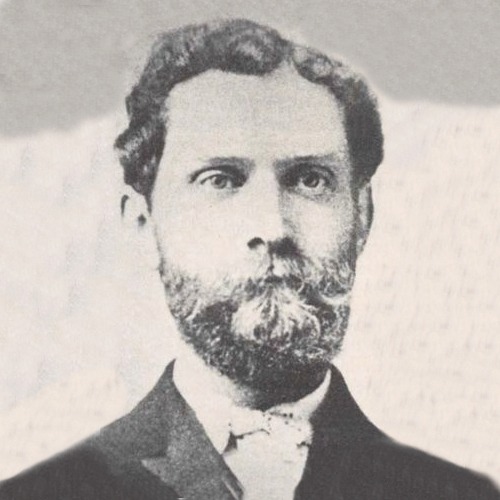
Dr. George Jacob Augur
1853 ~ 1927
“O thou herald of the Kingdom of God! … A thousand times bravo to thy high magnanimity and exalted aim!”
~ ‘Abdu’l-Bahá, in a letter to Dr. Augur,
Star of the West, Volumes 9-10, Page 163
Dr. George Augur’s gravesite is in Oahu Cemetery at 2162 Nuuanu Avenue, about nine (9) miles from the Honolulu International Airport. The hours of the cemetery are 7:00 am to 6:00 pm
Among the first Bahá’ís in Hawaii and the first resident Bahá’í in Japan, Dr. George Augur was one of 19 disciples of ‘Abdu’l-Bahá. Ruth Augur, his wife, served alongside her husband, hosting the early Bahá’í meetings in their home in Honolulu and joining her husband over several years to establish the faith in Japan.
George Jacob Augur was born on 1 October 1853 in West Haven, Connecticut. He graduated from Yale University Medical College in 1879. Augur was resident physician and surgeon at the State Hospital in New Haven and later an attending physician at the Oakland Homeopathic Hospital and Dispensary. Organized and managed by women and including women physicians on its staff, the hospital provided both conventional (allopathic) and homeopathic treatments, particularly for the indigent and the working poor.
In 1892, Augur married Ruth Barstow Dyer. They had one child, Morris Curtis Augur, born on 1 March 1894. Dr Augur worked as an allopathic physician until 1895, when he became a practitioner of homeopathy.
Finding that the climate of the Bay Area did not suit them, the family moved to Honolulu in 1898, where he opened a medical practice.
The Augurs were members of the Congregational Church. In the winter of 1905, Ruth Augur’s sister Alice Otis became a Bahá’í and opened her home for Bahá’í meetings. The sisters had connections with Bahá’ís not only in Honolulu but in Oakland. Ruth Augur, although content in her Christian faith, began attending the meetings and in 1907 invited the Bahá’ís to meet in her home on Beretania Street.
“From that time in 1907,” Agnes Alexander—the first Bahá’í of Hawaii who served with the Augurs in both Honolulu and Japan—recalls, “the Augur home became the radiant center of the Cause in Honolulu where the weekly meetings were held and the Bahá’í library kept.” Sometime between 1907 and 1909, both Ruth and George became Bahá’ís and in 1911 George was appointed the first treasurer of Hawaii’s Bahá’í group.
For Agnes Alexander, Augur was “independent in his convictions and accustomed to standing alone.” Whereas Ruth Augur “had a mother heart of love which she showered on everyone,” George Augur had a quiet and reserved disposition: “He was a man of few words, but his love for ‘Abdu’l-Bahá and insight into His station gave power to his words.”
Augur received six letters from ‘Abdu’l-Bahá. A number of these letters focused on Augur’s interest in serving the Bahá’í Faith in Japan. George Augur’s attraction to that country dated back to a three-month-long holiday there in 1906.
“Refined in his taste, he had great appreciation of Japan,” Agnes Alexander relates. In 1913 Augur wrote ‘Abdu’l-Bahá of his desire to go to Japan for an “indefinite stay.” In November of that year, Augur received a response: “Arise thou to perform the blessed intention thou art holding and travel thou to Japan and lay there the foundation of the Cause of God, that is, summon the people to the Kingdom of God.”

Traveling alone, Augur left for Japan in May 1914. On his arrival in Tokyo in June, he became the first Bahá’í to take up residence in that country. He began making friends and studying the language. Soon he received a tablet from ‘Abdu’l-Bahá that said in part, “A thousand times bravo to thy magnanimity and exalted aim!”
On 6 November 1914 Augur met Agnes Alexander at Tokyo Station. Having arrived at Kobe on 1 November 1914, she became the second resident Bahá’í in Japan. Alexander records that in April 1915 Augur went to Hawaii to rejoin his wife, “expecting to come back to Japan with her in the fall.” He wrote ‘Abdu’l-Bahá about his plans but carried out the decision before receiving a reply. “Dr. Augur felt very strongly the call to return to Japan,” Alexander remembers, “and dear Mrs. Augur would not put anything in his way and came with him.”
‘Abdu’l-Bahá’s secretary responded to the letter, stating “Your beautiful petition…was read this morning to the Beloved of our hearts. His face beamed with heavenly smile as he heard your name. . . . He said: ‘Write to Dr. Augur to return to Japan as soon as the first opportunity offers itself to him. Great blessings will descend upon the soul who teaches the Cause in that country. Its people are endowed with great capability.’”

At first the couple lived in a Japanese inn in Tokyo. According to Agnes Alexander, “He was fond of Japan, and its food and dress appealed to him.” Although Ruth Augur used some furniture she had brought from Honolulu, “Dr. Augur kept his room in the Japanese style, using a cushion to sit on the matted floor.”
A contemporary, Helen Bishop, said of Augur: “This immortal pioneer adopted the Japanese psyche: that is to say, he spoke the language, lived in a Japanese house, wore the formal kimono, and chose the serene canon of taste which consists in putting away all treasures saving but one point of contemplation—such as a rose, a vase, book or bibelot.”
Early in 1916, the Augurs moved from Tokyo to a rented Japanese-style house in Zushi, a town on the seashore south of Tokyo, where they lived for nearly two years. George Augur returned to Tokyo each Friday to support the weekly meeting he and Alexander had inaugurated immediately after her arrival in November 1914. She found him “a great help” because of his knowledge of the Bahá’í teachings. “In answer to almost any question, he can quote the exact words of ‘Abdu’l-Bahá or Bahá’u’lláh.”
In 1916 Dr. Augur wrote a magazine article titled “What is Bahá’ísm”. Published separately as a booklet, it became one of the first Bahá’í publications in Japanese.
The Augurs left Zushi for Honolulu in December 1917 but went back to Japan for a final sojourn from the fall of 1918 until the spring of 1919. That year, Abdu’l-Bahá gave permission for the couple to return home:
Your services at this spot are recognized and appreciated, particularly (your services) in Tokyo…. These few seeds of corn that ye have sown in that soil shall lead to luxuriant crops, this limited number of souls will be converted into great cohorts, nay, rather into an imposing spiritual army, and that seed, under the Divine Direction, shall yield abundant and heavy clusters….
On returning to Honolulu in 1919, Augur resumed his homeopathic practice and the couple continued Bahá’í activities in their large Beretania Street home until 1927. He died of a stroke on 13 September 1927 in Honolulu. He was buried in Oahu Cemetery at 2162 Nuuanu Street in Honolulu. Markers for Ruth Augur, who passed away in 1938; his son, Morris (d. 1938); and his son’s first wife, Myrtle (d. 1936), and second wife, Eleanor (d. 1997), are adjacent to his.
In volumes of the Bahá’í World published in 1930 and 1933, a list prepared by Shoghi Effendi places George Augur among the nineteen Western Bahá’ís designated as “The Disciples of ‘Abdu’l-Bahá: ‘Heralds of the Covenant.'”
This article is a condensed and revised version of an entry in The Bahá’í Encyclopedia Project by Duane K. Troxel, published by the National Spiritual Assembly of the Bahá’ís of the United States.