Artist Kala’e Tangonan is leading an effort to revitalize Molokai’s high school by “remuraling” its exterior walls. Tangonan, a former student at the high school and member of the Bahá’í community, is a well-known artist, entrepreneur, and volunteer for any and all local community activities that require an artist’s touch.
“Molokai High School was once a vibrant canvas where colorful murals told stories of culture, history, and community,” writes Kala’e in an article published in the Molokai Arts Center newsletter. “These murals, painted in the late 70s early 80s, served as a source of inspiration and pride for students, faculty, and the surrounding community. They were painted by the Art Classes at the time under our very own Howard Selnick.”
“Unfortunately, over time, these works of art were painted over, leaving behind plain, uninspiring walls. As the school looks toward the future, remuraling these spaces offers an incredible opportunity to revitalize the environment and foster a more positive, engaging learning atmosphere.”
The remuraling project now underway is a participatory project involving many volunteers, including some local Bahá’ís. The remuraling begins with an innovative technique where many people literally “lend a hand.” As shown in the images accompanying this article, the first layer of the mural involves volunteers who stick their hands into paint and make thousands of handprints on the walls. This engages students and community members in the project, adding their “DNA” to the murals’ textured backdrop. Once the hand printing is completed, water from around Molokai will be added to washes that add another layer to the murals. Finally, a group of artists assembled by Tangonan will add a last layer of images that tell stories from Molokai’s history.
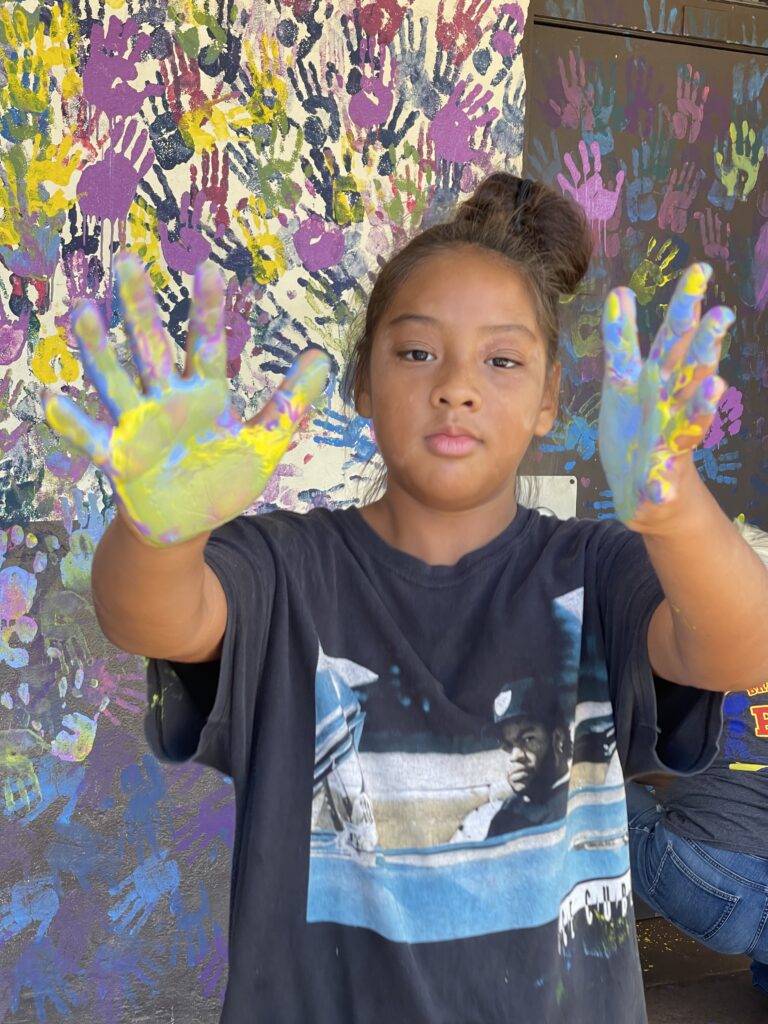
Kawelu Tangonan lends a hand in remuraling Molokai High School.
In her newsletter article Tangonan explains that beautifying the school walls can create a healthier and happier learning environment for students and faculty by:
1. Enhancing Emotional Well-Being and Reducing Stress
Studies show that exposure to art, especially in learning environments, can significantly reduce stress and promote emotional well-being. Vibrant and meaningful murals that reflect the culture, values and mo’olelo of Molokai can create a sense of belonging and pride. When students see their heritage and identity reflected in their surroundings, it fosters a positive emotional connection to the school, making it a place where they feel safe and inspired.
2. Boosting Creativity and Inspiration
Murals have the power to stimulate creativity and imagination. Creating these visual stories along with the students encourages students to think beyond textbooks and engage with ideas in a more dynamic way. The return of murals can serve as a catalyst for creative expression, inspiring students to explore their own artistic talents and see the world through different perspectives.
3. Building a Sense of Community and Identity
The original murals were more than just decorative—they were a reflection of the island’s rich history, cultural heritage, and values of the school. They were there to remind us of who we were, giving us identity, being that we are Mighty Farmers of land and sea. Muraling the school provides an opportunity to involve students, local artists, and the community in a collaborative process that reinforces a sense of unity and pride. When students contribute to the creation of these murals, they develop a deeper connection to their environment, fostering a stronger sense of ownership and responsibility for their school.
4. Improving Focus and Academic Performance
A visually stimulating and aesthetically pleasing environment can have a positive impact on students’ focus and concentration. Studies suggest that learning spaces that incorporate color and visual interest can improve cognitive function and memory retention. Remuraling Molokai High School can create an environment where students feel more engaged and motivated, ultimately contributing to improved academic performance.
5. Encouraging Respect and Stewardship
When students take pride in their environment, they are more likely to treat it with care and respect. By involving them in the process of designing and creating the murals, they develop a sense of responsibility for maintaining the beauty of their school. This sense of stewardship can extend beyond the school grounds, fostering a lifelong commitment to caring for their community and environment.
“Art heals communities,” says Tangonan. “Bahá’u’lláh said that ‘Arts, crafts and sciences uplift the world of being and are conducive to its exaltation.’ It is a beautiful thing, being Bahá’í and softly changing others to feel loved and cared for. I think and feel that’s what art does. It quietly makes people feel better without them even knowing. In a sense, art is worship:
In this wonderful new age, art is worship. The more thou strivest to perfect it, the closer wilt thou come to God. What bestowal could be greater than this, that one’s art should be even as the act of worshipping the Lord? That is to say, when thy fingers grasp the paint brush, it is as if thou wert at prayer in the Temple. – ‘Abdu’l-Bahá
“So remuraling Molokai High School is more than just adding color to the walls,” says Tangonan. “It’s about restoring a sense of identity, community, and inspiration. By breathing new life into these spaces, the school can create a healthier, happier, and more nurturing environment where students feel empowered to learn, grow, and thrive. The return of murals will not only beautify the campus but also reinforce the values and traditions that make Molokai High School a special place for generations to come.”
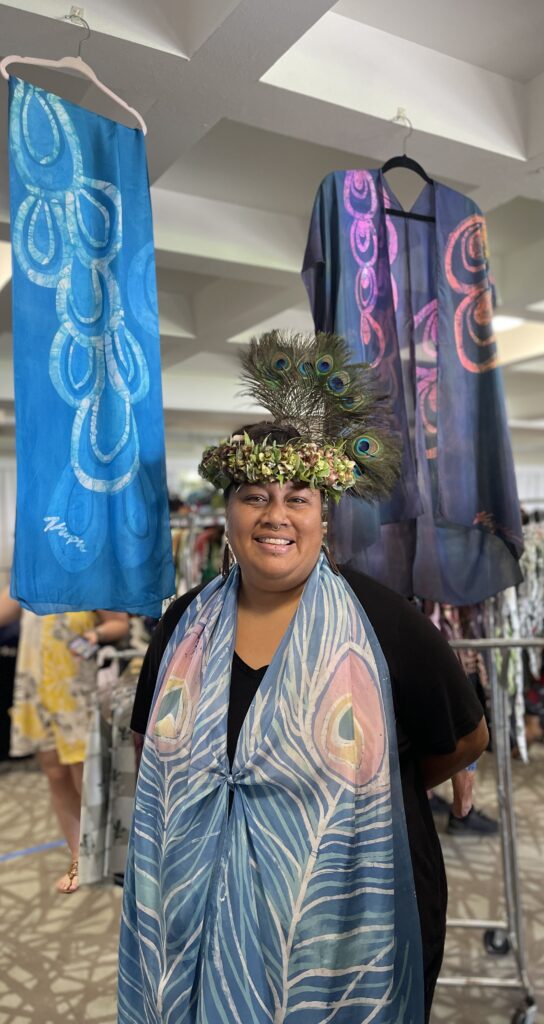
Kala’e Tangonan is a Molokai-based artist.